
Pinocchio has accompanied Pietro Arnoldi’s work for many years. The connection begins with the material itself: a wooden character through whom the artist continually returns to themes of transformation, play, and the possibility of changing form.
Over time, Pinocchio has developed into an ongoing field of research. Pietro has created sculptures, drawings and stories around the character, interpreting him in different ways: as a child, an adult, a musician, a pupil, a teacher; alone or alongside other figures from Collodi’s story. The wooden puppet becomes a way of observing human behaviour, contradictions and the different stages of life.
In 2021, this body of work was presented at the Parco Policentrico Collodi–Pinocchio in the exhibition L’Albero Pinocchio, forme e immagini, held from 1 June to 4 July across the Monumental Park of Pinocchio, the historic Garzoni Garden and the Butterfly House. The opening included a live performance in which Pietro worked directly on wood in front of the public, revealing the process through which a tree trunk gradually becomes a figure.
PINOCCHIO IN TRAREGO VIGGIONA
In 2022, Pietro’s work on Pinocchio became a permanent public artwork in Trarego Viggiona, overlooking Lake Maggiore.
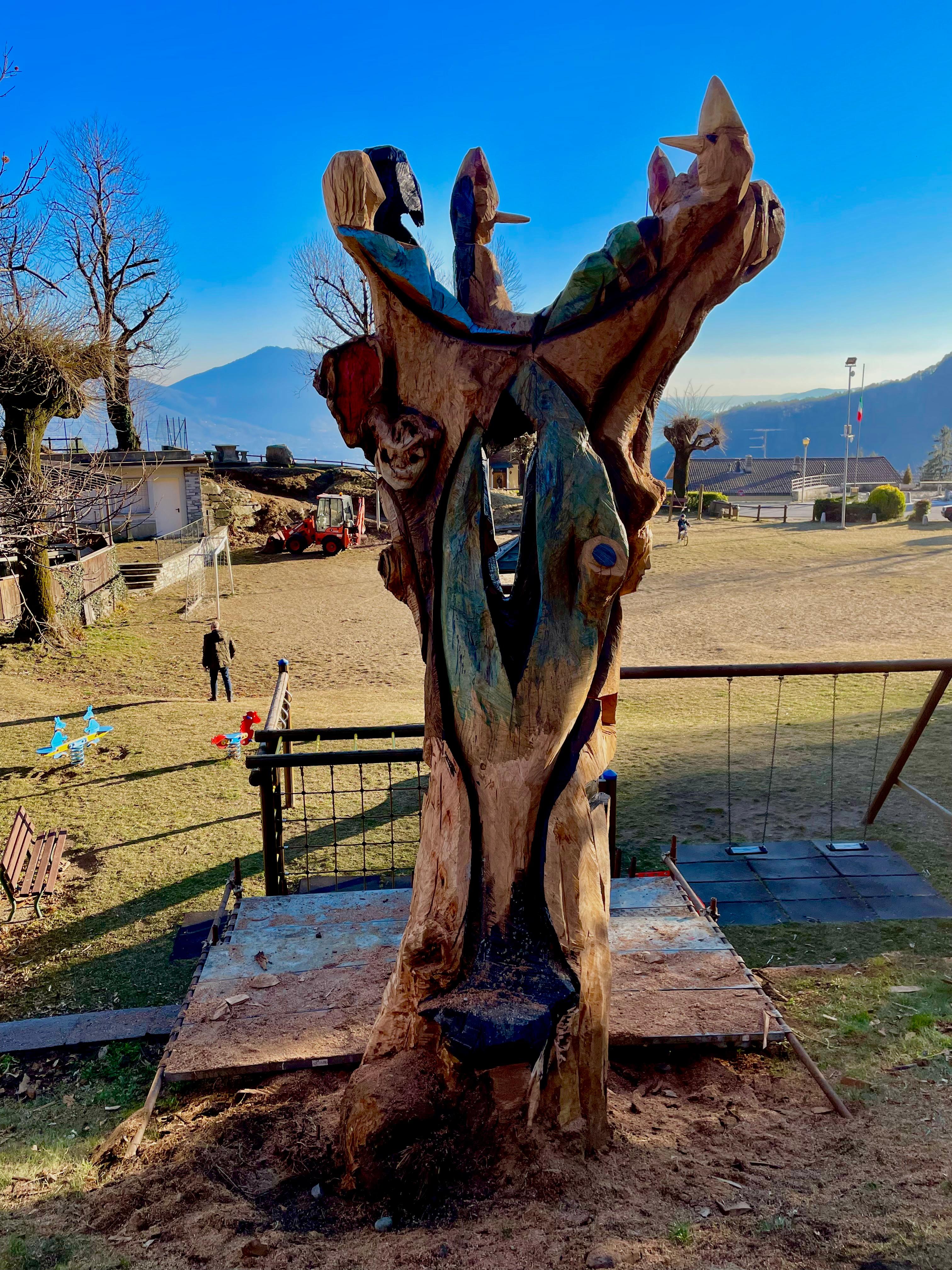
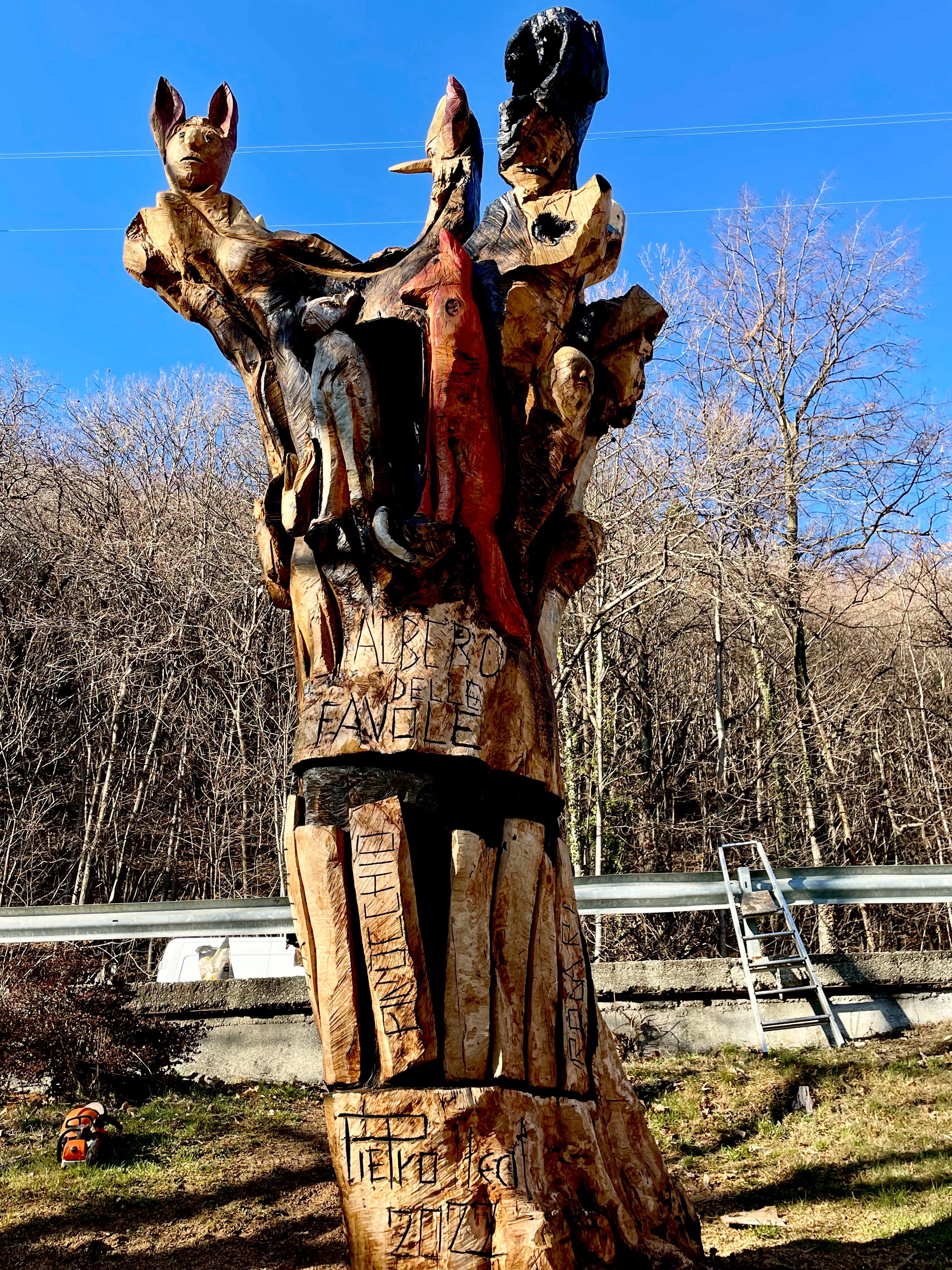
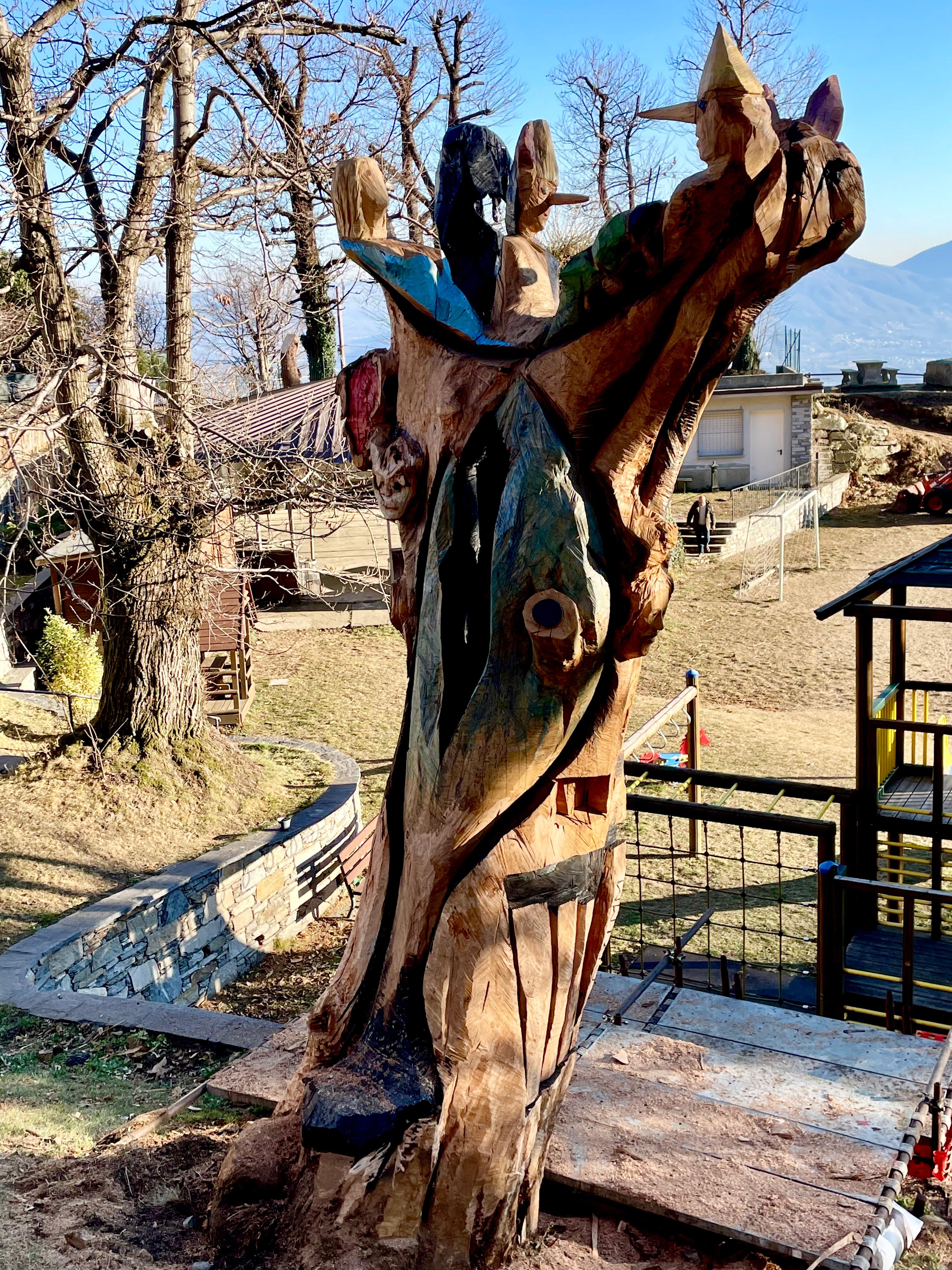
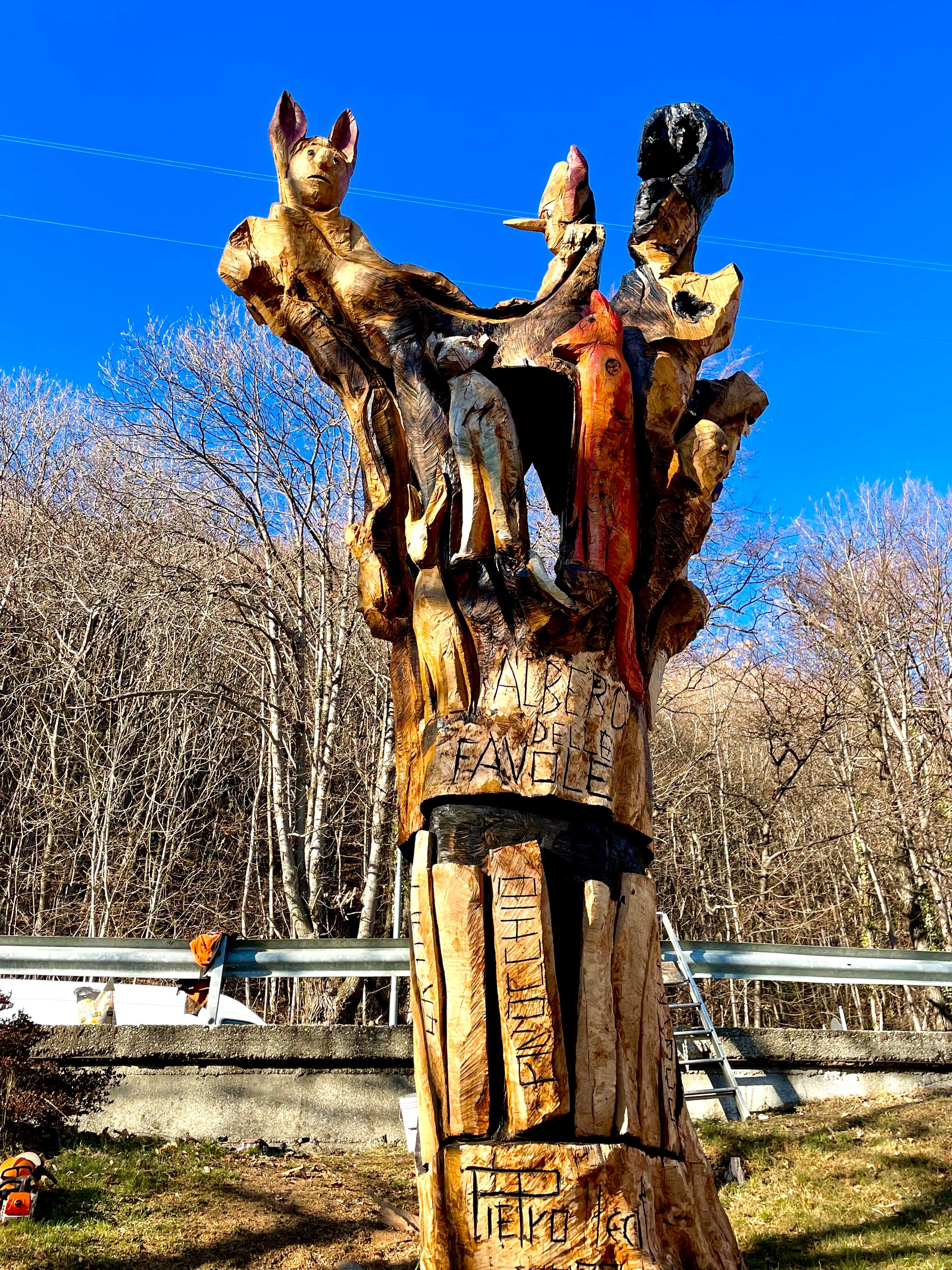
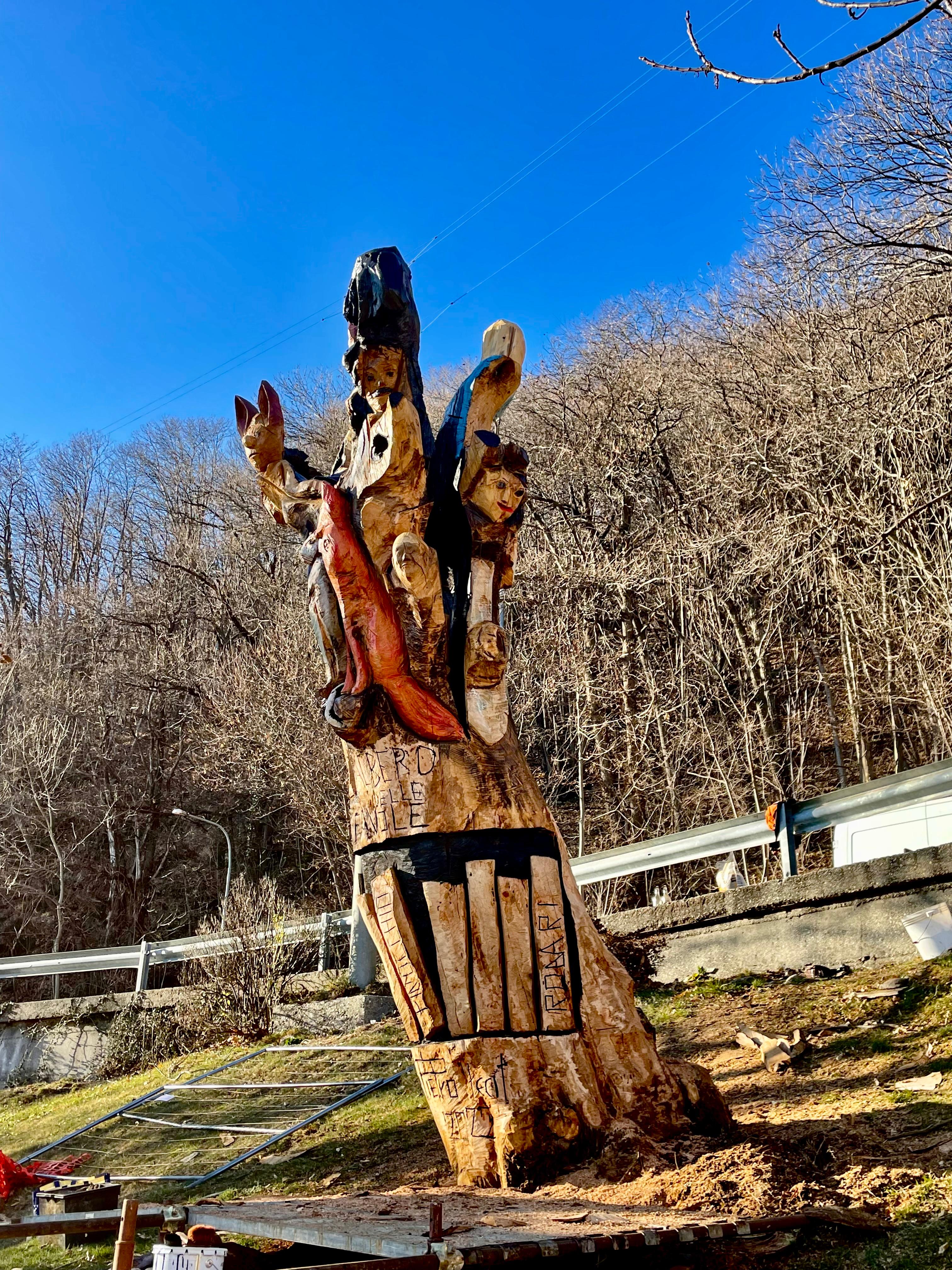
At Pianaccio, inside the village playground, Pietro worked directly on a large chestnut tree that had reached the end of its natural life. Rather than removing the trunk from the place where it had grown, he transformed it with a chainsaw into a monumental sculpture approximately six metres high: The Tree of Tales (L’Albero delle Favole)
.
Pinocchio, Geppetto inside the whale, the Cat and the Fox, and other episodes from the story emerge from the surface of the tree. Yet the structure and material of the old chestnut remain clearly visible: the tree continues to occupy its original place in the landscape, taking on a new role as a public narrative.
The work was created within the context of the Sentiero d’Arte di Trarego and inaugurated on 18 April 2022. The day also involved children and families through creative workshops inspired by Pinocchio. Located in a space used daily by the local community, the sculpture has become part of the park and of village life: an old tree transformed into a place for storytelling, encounter and play.

PINOCCHIO OF TRAREGO VIGGIONA
RASSEGNA STAMPA
Pinocchio has accompanied Pietro Arnoldi’s work for many years. The connection begins with the material itself: a wooden character through whom the artist continually returns to themes of transformation, play, and the possibility of changing form.
Over time, Pinocchio has developed into an ongoing field of research. Pietro has created sculptures, drawings and stories around the character, interpreting him in different ways: as a child, an adult, a musician, a pupil, a teacher; alone or alongside other figures from Collodi’s story. The wooden puppet becomes a way of observing human behaviour, contradictions and the different stages of life.
In 2021, this body of work was presented at the Parco Policentrico Collodi–Pinocchio in the exhibition L’Albero Pinocchio, forme e immagini, held from 1 June to 4 July across the Monumental Park of Pinocchio, the historic Garzoni Garden and the Butterfly House. The opening included a live performance in which Pietro worked directly on wood in front of the public, revealing the process through which a tree trunk gradually becomes a figure.
In 2022, Pietro’s work on Pinocchio became a permanent public artwork in Trarego Viggiona, overlooking Lake Maggiore.
At Pianaccio, inside the village playground, Pietro worked directly on a large chestnut tree that had reached the end of its natural life. Rather than removing the trunk from the place where it had grown, he transformed it with a chainsaw into a monumental sculpture approximately six metres high: The Tree of Tales (L’Albero delle Favole).
Pinocchio, Geppetto inside the whale, the Cat and the Fox, and other episodes from the story emerge from the surface of the tree. Yet the structure and material of the old chestnut remain clearly visible: the tree continues to occupy its original place in the landscape, taking on a new role as a public narrative.
The work was created within the context of the Sentiero d’Arte di Trarego and inaugurated on 18 April 2022. The day also involved children and families through creative workshops inspired by Pinocchio. Located in a space used daily by the local community, the sculpture has become part of the park and of village life: an old tree transformed into a place for storytelling, encounter and play.